Ending knowledge silos
Ending knowledge silos starts with keeping the steps
Work that stops when someone is out is work whose method only that person can see. In Samurai App, steps that worked stay as skills the team can use. What grows stays inside your own tenant.
Open Samurai AppRequest materials
- How the work was done
What happens when work is locked inside one person#
Silos creep into every workplace a little at a time.
It stops when they're out
Without that person, nobody knows how to proceed or how to decide. The more urgent the work, the longer it waits for them to return.
Manuals fall behind
Even when a work manual exists, no one updates it each time the steps change. The written steps and the real ones drift apart.
Know-how leaves with transfers
Whatever didn't make it into the handover document leaves the department with the person. The next owner repeats the same mistakes.
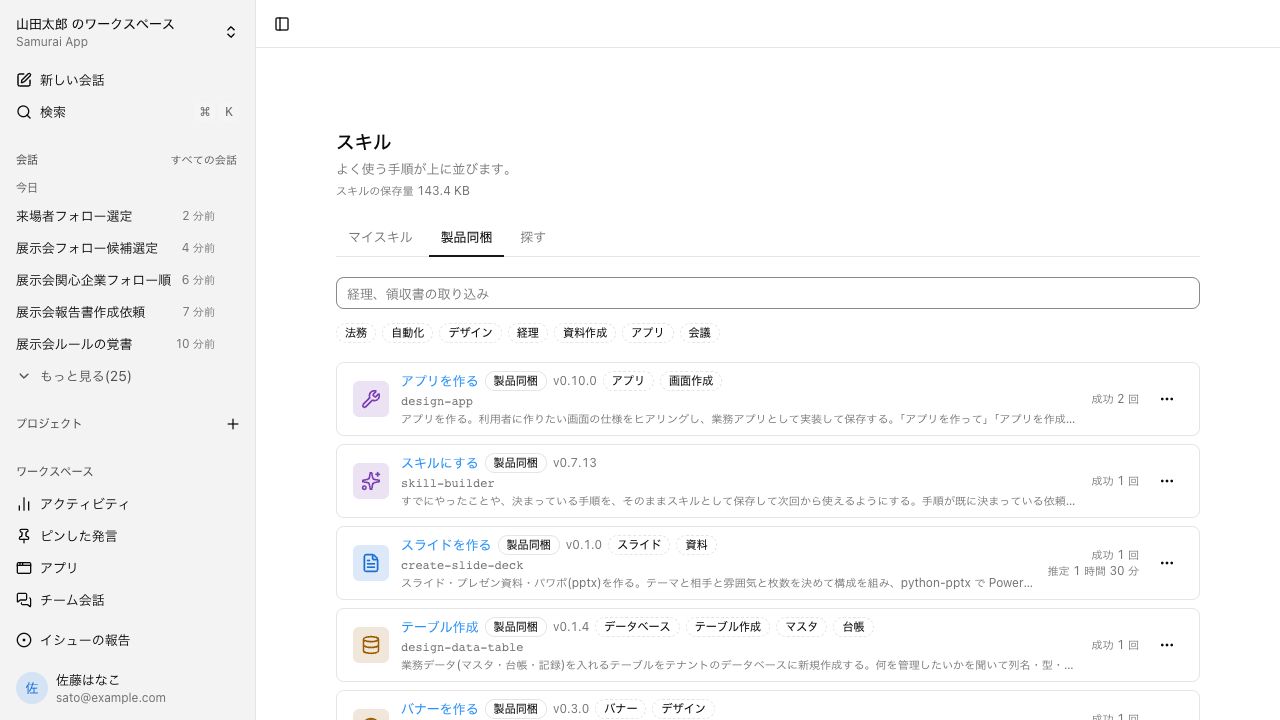
The method stays in skills and memory#
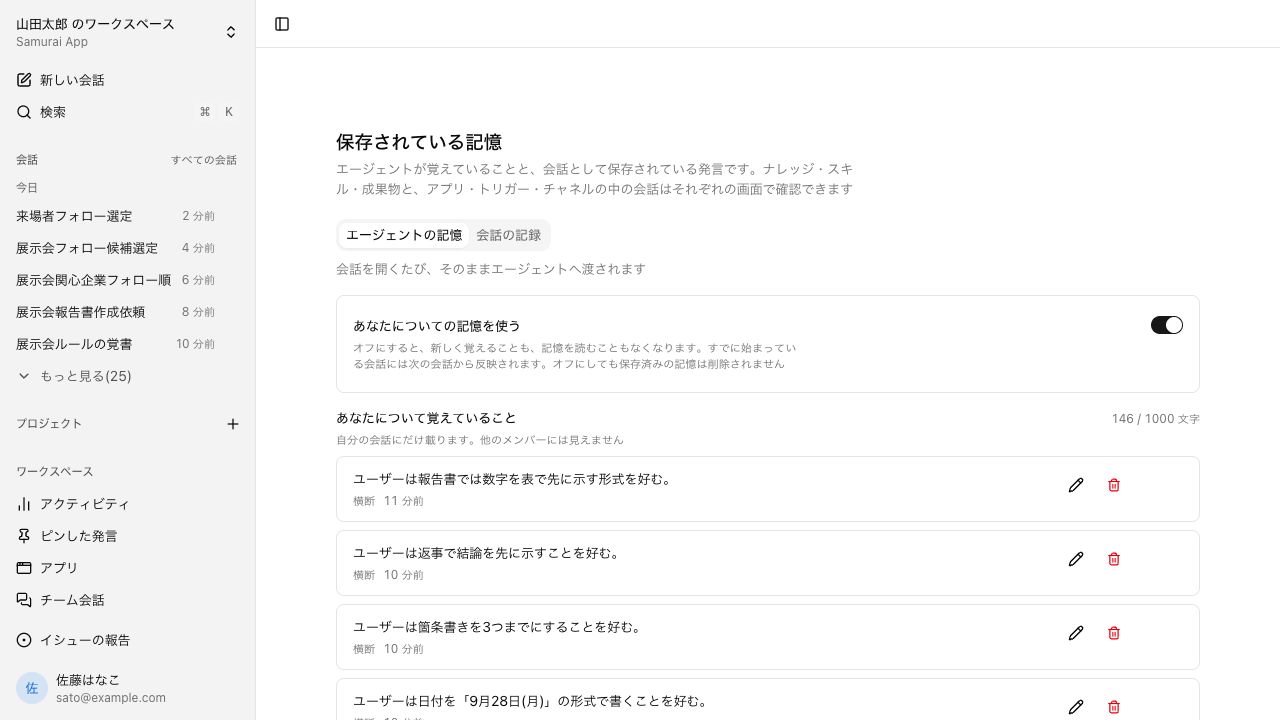
Once the steps settle, the agent asks whether to turn the series of tasks into a skill. A skill is a readable procedure describing how the work is done. Preferences and context stay in memory and are used in the next conversation.
- This Week's Suggestions on the start screen offers to turn repeated work into a skill
- Record your own actions in the browser and turn them into a procedure
- Each edit keeps a version; compare and restore any of the latest 20
From the second time, the same steps run#
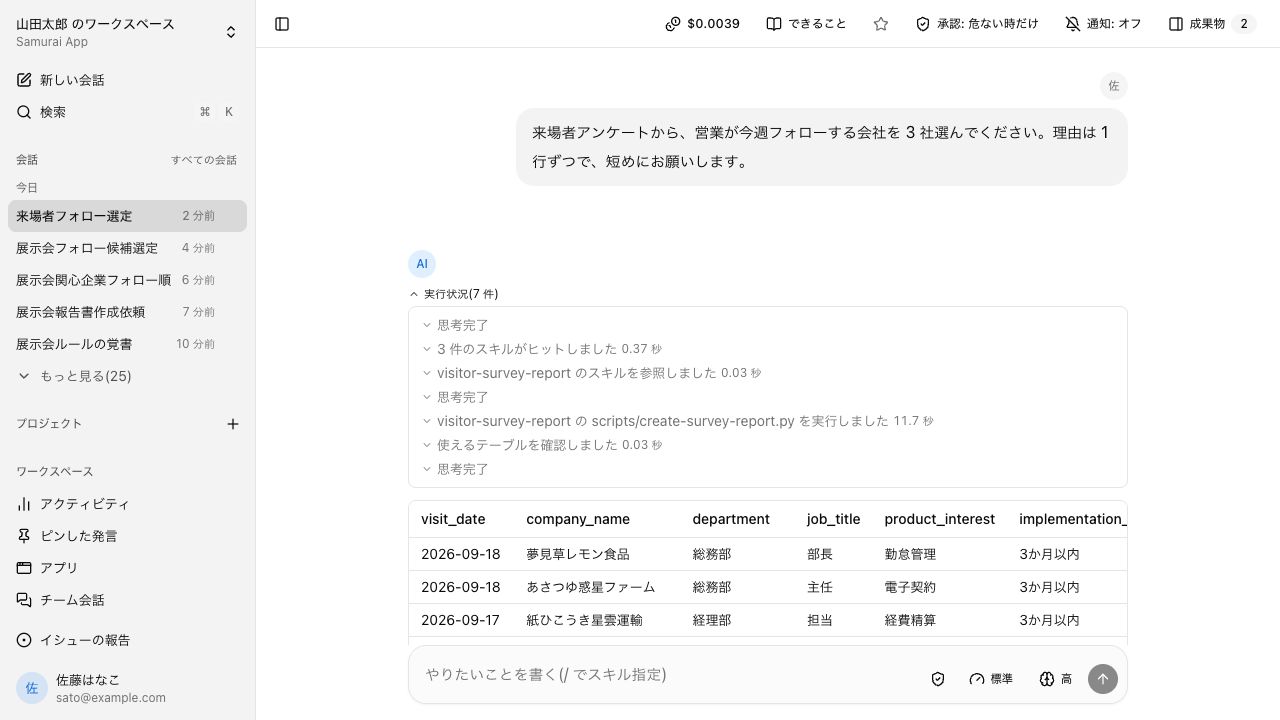
Steps that worked can be locked in as a runnable script. From the second run on, the script runs, so results are the same every time. The model is called only where judgment is needed.
- Skills Learning drafts improvements from conversations and applies them to your company's version after approval
- A skill's steps can be edited in two views: a diagram and a form
Turn one person's method into the team's#
Your skills can be shared with the whole tenant or with a group you belong to. Sharing hands over a copy, so your own skill stays with you.
- Turn on your clone bot, and while you're away it drafts answers from your files and memory, sent back only after you approve
- Turn steps into a workflow, and they always run in the written order
Frequently asked questions#
Where do I start to reduce dependence on individuals?
Start by having the owner do their everyday work in Samurai App conversations. When the steps settle, the agent asks whether to make them a skill. Before anyone writes a separate manual, the steps that actually ran are kept.
How do I turn tacit knowledge into explicit knowledge?
In Samurai App, the way work was done in conversations stays as a skill. A skill is a procedure people can read, so the order and the criteria for decisions can be checked later. Preferences and context build up in memory.
Can it replace a work manual?
A skill is a procedure, so it can cover part of what a work manual does. For explanations and diagrams, write them on a SIROE page. When the steps need changing, improvements are drafted from conversations and applied after approval.
Could our skills or memory be used by other companies?
No. Each tenant is isolated, and only your own skills and memory grow. Skills can be shared only within your tenant.
Everyday work comes together, connects, and becomes the company's strength.